
NABH
Benefits of NABH Accreditation: Why It Matters for Hospitals and Patients
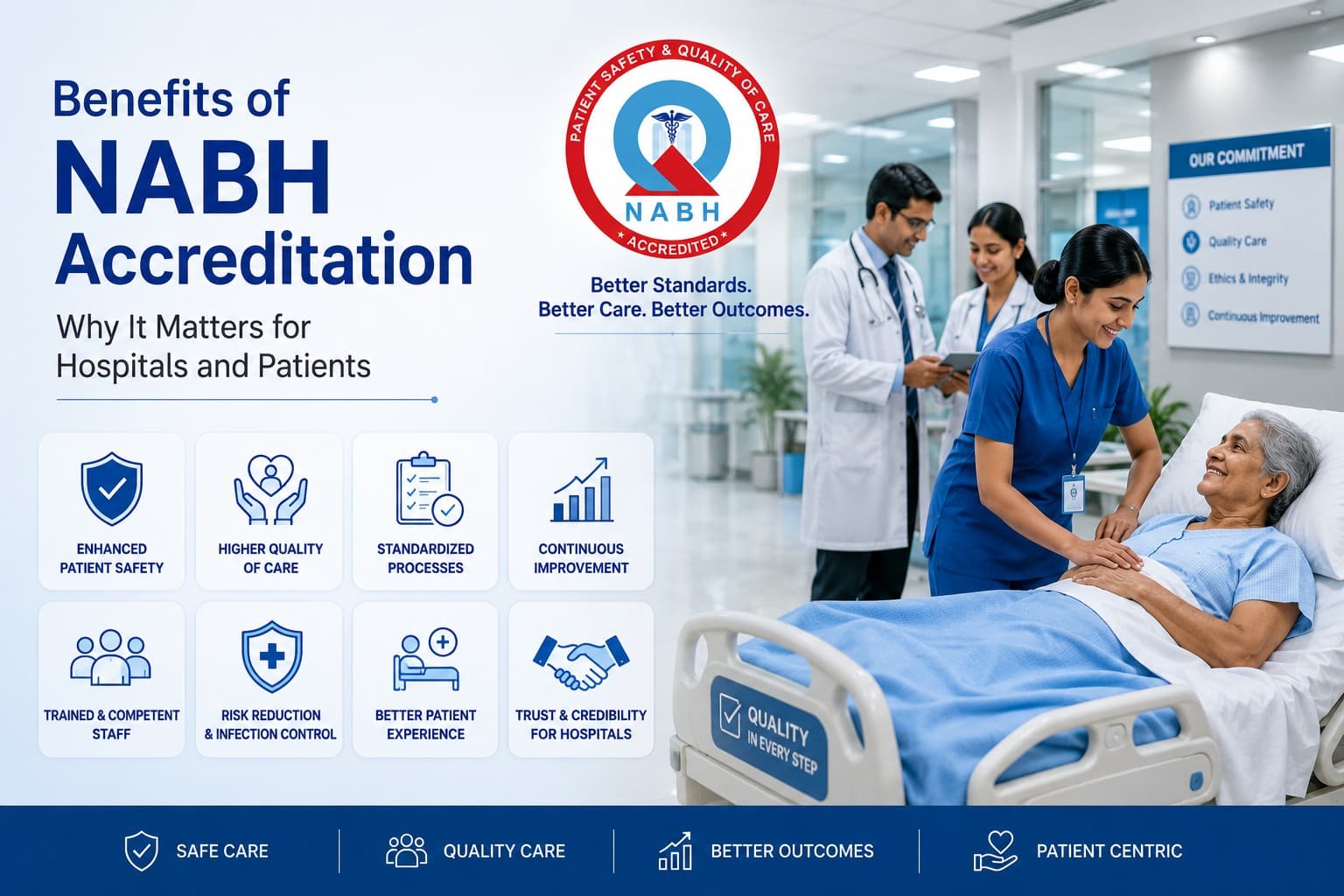
Table of Contents
What is NABH Accreditation?
NABH (National Accreditation Board for Hospitals & Healthcare Providers) accreditation is India's leading quality certification for healthcare organizations. It demonstrates that a hospital follows nationally recognized standards for patient care, safety, clinical excellence, and operational efficiency.
Whether you are a hospital owner, administrator, doctor, or patient, NABH accreditation offers significant advantages that extend far beyond obtaining a certificate.
Why is NABH Accreditation Important?
Healthcare quality is not measured solely by advanced equipment or specialist doctors. Consistent processes, patient safety, documentation, and continual improvement are equally essential.
NABH accreditation provides an independent assurance that a hospital consistently delivers safe and quality healthcare services.
Benefits of NABH Accreditation for Hospitals
1. Improved Patient Safety
Patient safety is at the core of NABH standards.
Hospitals implement:
- Patient identification protocols
- Medication safety procedures
- Surgical safety checklists
- Fall prevention programs
- Incident reporting systems
- Risk management practices
These measures significantly reduce medical errors and improve patient outcomes.
2. Standardized Clinical Processes
Accreditation requires hospitals to establish documented Standard Operating Procedures (SOPs) for every department.
Benefits include:
- Uniform treatment practices
- Reduced variation in care
- Better clinical outcomes
- Easier staff training
- Improved compliance
3. Enhanced Infection Control
Hospital-acquired infections are one of the biggest healthcare challenges.
NABH encourages:
- Hand hygiene monitoring
- Biomedical waste management
- Sterilization protocols
- Isolation procedures
- Antibiotic stewardship
- Continuous infection surveillance
This leads to safer environments for both patients and healthcare workers.
4. Better Patient Satisfaction
Patients appreciate hospitals that provide:
- Transparent communication
- Respect for patient rights
- Timely treatment
- Reduced waiting times
- Efficient complaint resolution
- Safe discharge planning
Higher patient satisfaction often translates into stronger reputation and increased patient loyalty.
5. Increased Staff Accountability
NABH promotes:
- Defined job responsibilities
- Continuous staff training
- Competency assessments
- Performance monitoring
- Leadership involvement
Employees clearly understand their roles and responsibilities.
6. Operational Efficiency
Accreditation helps hospitals streamline workflows by reducing unnecessary delays and duplication.
Benefits include:
- Faster documentation
- Better resource utilization
- Improved coordination
- Efficient inventory management
- Reduced operational waste
7. Continuous Quality Improvement
Quality is not a one-time achievement.
NABH encourages hospitals to monitor Key Performance Indicators (KPIs), conduct audits, analyze incidents, implement corrective actions, and review performance regularly to foster continual improvement.
8. Better Risk Management
Hospitals proactively identify and manage risks related to:
- Clinical care
- Infrastructure
- Fire safety
- Medical equipment
- Information security
- Patient incidents
This reduces legal and operational risks.
9. Stronger Documentation Practices
Proper documentation supports:
- Continuity of patient care
- Legal compliance
- Clinical audits
- Insurance claims
- Accreditation assessments
Well-maintained records also enable data-driven decision-making.
10. Competitive Advantage
NABH accreditation differentiates hospitals in an increasingly competitive healthcare market.
Accredited hospitals often experience:
- Greater patient confidence
- Improved brand reputation
- Enhanced credibility
- Increased referrals
- Stronger partnerships
Benefits for Patients
Patients receive several advantages when choosing an NABH-accredited hospital.
Safe Healthcare
Hospitals follow evidence-based protocols to reduce medical errors and improve patient safety.
Qualified Healthcare Professionals
Staff members undergo regular training and competency assessments to maintain high standards of care.
Patient Rights Protection
Patients have clearly defined rights, including:
- Privacy
- Confidentiality
- Informed consent
- Access to medical records
- Complaint resolution mechanisms
Better Communication
Hospitals provide clear explanations regarding diagnosis, treatment options, medications, and discharge instructions.
Quality Infrastructure
Accredited hospitals maintain high standards for:
- Emergency preparedness
- Cleanliness
- Equipment maintenance
- Infection prevention
- Facility safety
Benefits for Hospital Management
Hospital leadership gains:
- Better governance
- Measurable quality indicators
- Improved regulatory compliance
- Reduced clinical risks
- Better decision-making using quality data
- Enhanced organizational culture
Financial Benefits
Although accreditation requires investment, it often results in long-term savings through:
- Reduced medical errors
- Lower infection rates
- Improved operational efficiency
- Better resource utilization
- Fewer legal disputes
- Increased patient trust
Supports a Culture of Excellence
One of the greatest strengths of NABH accreditation is that it creates a culture where every employee contributes to quality improvement.
Departments collaborate more effectively, staff become more quality-conscious, and continuous learning becomes part of everyday operations.
Common Challenges During Accreditation
Hospitals may face challenges such as:
- Documentation gaps
- Resistance to change
- Staff training requirements
- Process standardization
- Infrastructure upgrades
- Time and resource constraints
Working with experienced quality consultants and using digital quality management tools can simplify the accreditation journey.
How to Prepare for NABH Accreditation
- Conduct a gap analysis.
- Develop policies and SOPs.
- Train all staff members.
- Implement quality indicators.
- Perform internal audits.
- Address identified gaps.
- Conduct mock assessments.
- Apply for the official assessment.
Conclusion
NABH accreditation is more than a certification—it is a commitment to delivering safe, ethical, and high-quality healthcare. By adopting standardized processes, strengthening patient safety, and fostering a culture of continuous improvement, accredited hospitals build greater trust among patients, healthcare professionals, insurers, and regulatory bodies.
For hospitals aiming to improve clinical outcomes, operational efficiency, and long-term sustainability, NABH accreditation is a strategic investment that benefits the entire healthcare ecosystem.
Frequently Asked Questions (FAQs)
1. Is NABH accreditation mandatory?
No. It is voluntary, but many hospitals pursue it to demonstrate quality and improve patient confidence.
2. How long does NABH accreditation last?
Accreditation is granted for a defined period, after which hospitals must undergo reassessment to maintain compliance.
3. Can small hospitals apply for NABH accreditation?
Yes. NABH offers accreditation programs suitable for hospitals of varying sizes and specialties.
4. Does NABH accreditation improve patient safety?
Yes. It emphasizes standardized clinical protocols, infection prevention, medication safety, and continuous quality improvement.
5. What is the biggest advantage of NABH accreditation?
The most significant benefit is the establishment of a consistent, patient-centered quality system that enhances safety, clinical outcomes, and operational excellence.
Ready to Assess Your Hospital's Readiness?
A Gap Audit is the first step towards successful accreditation. Understand your strengths, weaknesses, and get a clear action plan.
Learn About Our Gap Audit Service